Ball Stores

The Ball Stores building, originally known as the W. A. McNaughton Building, stood at the southeast corner of Walnut and Charles Streets in downtown Muncie. Constructed between 1901 and 1903 for the W. A. McNaughton Company, it was designed by the architectural firm Crapsey and McCullough in the Beaux-Arts style, an approach expressed through its formal, monumental commercial character and granite-detailed Walnut Street entrance. The five-story structure was built as a modern department store for a growing regional shopping center, providing expansive retail space for clothing, household goods, and other merchandise. The McNaughton store prospered there until the Great Depression forced its closure in the early 1930s. Investors later organized as Ball Stores, Inc., encouraged by George and Frank Ball's desire to retain a major downtown department store, purchased the store and building. In 1938, Fred J. Petty and Margaret Ball Petty acquired Ball Stores and operated it for decades, making it a familiar anchor of Muncie retail life.
Ball Stores functioned as Muncie's locally owned, full-service department store, offering shoppers a broad range of merchandise under one roof: clothing; shoes; jewelry and beauty items; bedding and linens; housewares; and home furnishings. When Ball Stores opened in 1934 it emphasized high-quality goods, courteous service, and the idea that a department store could be a civic institution as well as a business. The downtown Walnut Street store served Muncie residents and customers from surrounding East Central Indiana. Holiday window displays made it a cultural destination as well as a retail one. Over time, the store adapted to changing markets: it acquired the Collegienne Shops near Ball State in 1968, extending its appeal to college-age women and the university community, and opened a Muncie Mall location in 1978 to reach the growing suburban, automobile-oriented consumer market. This shift from a single downtown department store to specialized and mall-based outlets reflected changing shopping patterns.
By the 1980s, shoppers increasingly favored automobile-oriented suburban retail, especially the Muncie Mall, where Ball Stores had opened a branch in 1978; the company’s effort to operate downtown, mall, and college-area locations could not overcome financial difficulty. When the downtown Ball Stores closed in 1986, the vacant five-story building no longer had a clear economic use, and it was demolished in 1989. Its loss also marked a cultural shift: a store remembered for elegant shopping, holiday displays, food service, and community events gave way to a more office-oriented downtown. The former site at 400 South Walnut Street is now occupied by the law offices of DeFur Voran LLP. Some of the building’s architectural fabric survives: salvaged granite entrance columns or blocks are preserved along the southern edge of the alley beside the new building, while additional granite entrance elements are displayed at Minnetrista Cultural Center, preserving a tangible connection to Ball Stores and the earlier McNaughton Building.
For more information, visit: https://dmr.bsu.edu/digital/search/searchterm/McNaughton's%20Department%20Store%20(Muncie%2C%20Ind.)/field/subjec/mode/exact/conn/and
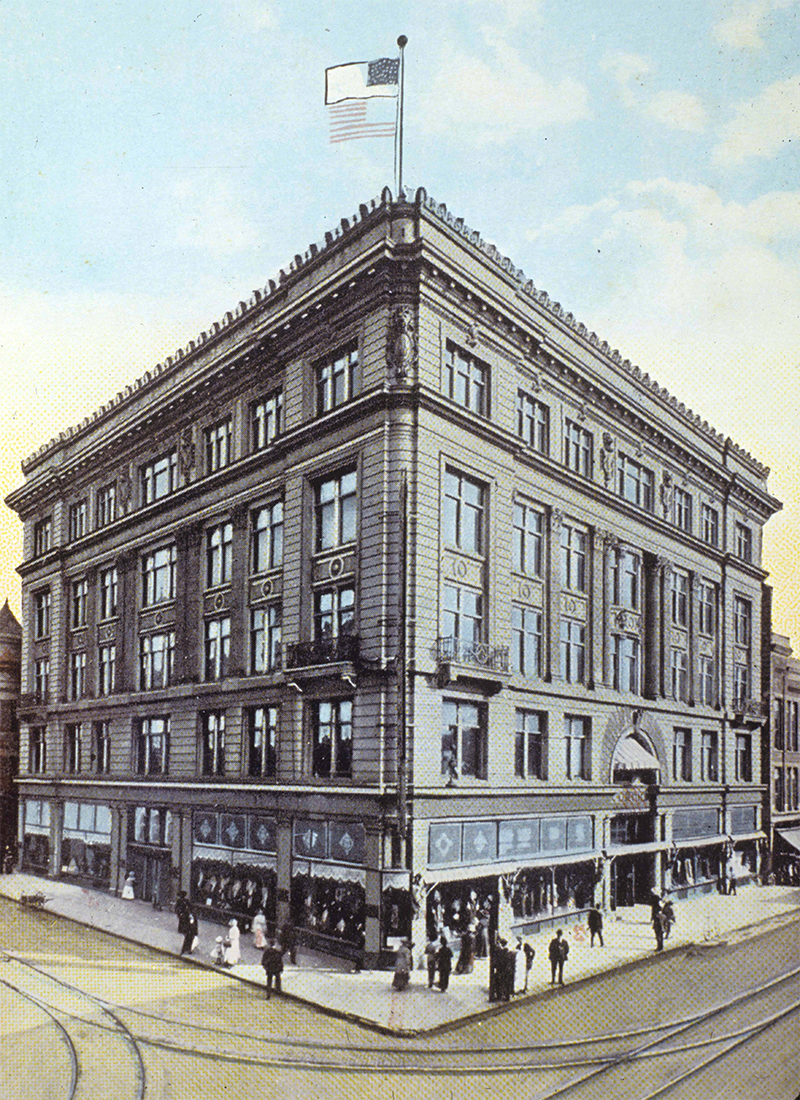 Digital Media Repository. Ball State University Libraries.
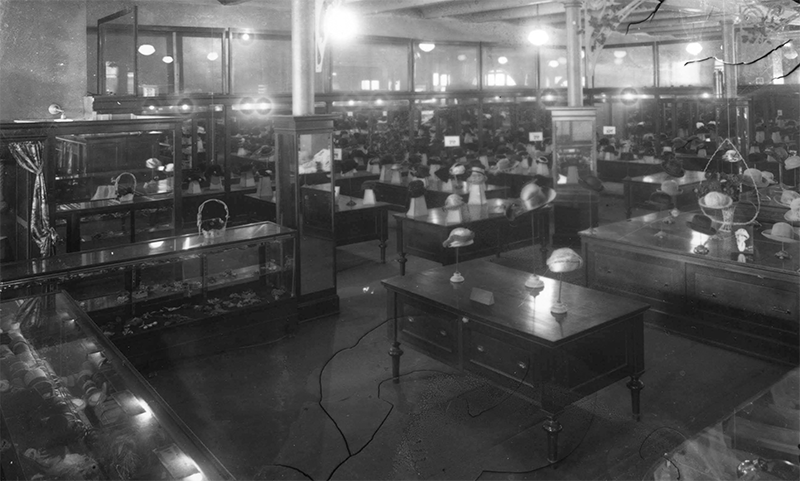 Digital Media Repository. Ball State University Libraries.
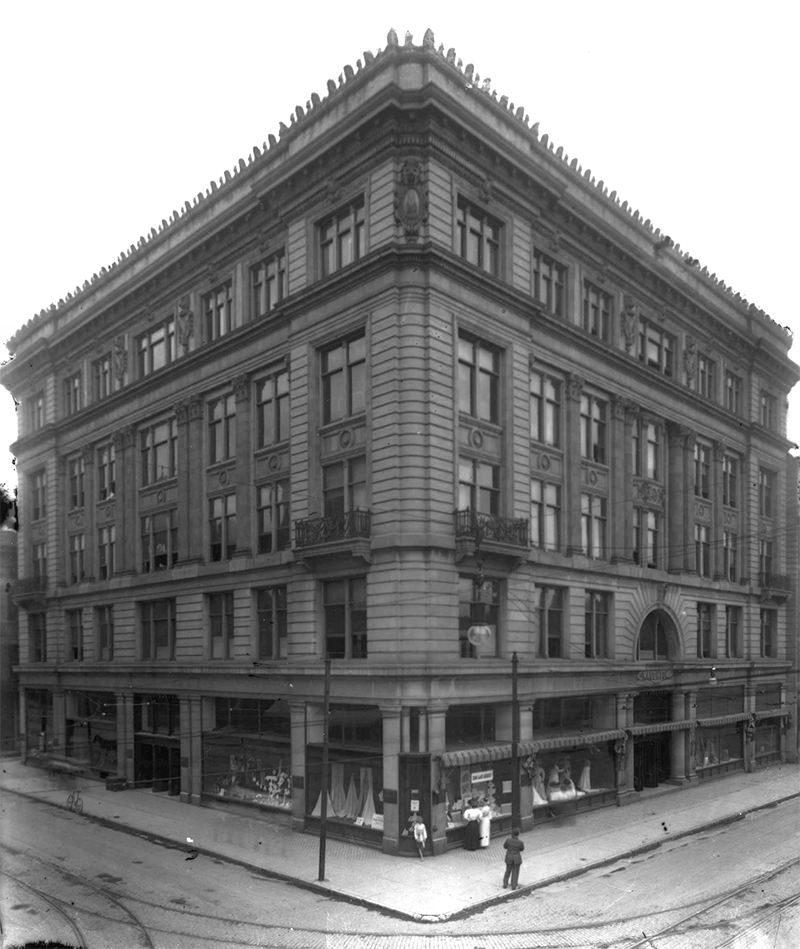 Digital Media Repository. Ball State University Libraries.