Rivoli Theater

Rivoli Theatre stood at the corner of South Mulberry and East Adams streets from 1927 until its demolition in 1987. Designed by Indianapolis architect Donald Graham, it opened on April 16, 1927, as a large downtown movie and vaudeville house, seating about 1,800 patrons. Early publicity called the architectural style “Spanish Shrine of the Silent Art,” suggesting a Spanish-influenced, atmospheric movie-palace design typical of the 1920s. The Rivoli combined first-run motion pictures, live vaudeville, organ music, and later sound films, with air conditioning helping make it a major entertainment destination. Muncie's Rivoli Theatre began in 1927 as an upscale, single-screen “movie palace” whose programs combined vaudeville acts, silent films, and live Wurlitzer-organ accompaniment.
It was marketed to downtown shoppers, business people, and Ball State students—its nearby Rivoli restaurant was especially popular with those groups while its affordable 10 to 50-cent admission also made it accessible to families. Live programming remained part of its identity, including vaudeville in its early years. By 1976 the Rivoli had been divided into two screens, reflecting the shift from grand single-auditorium showmanship toward multiplex-style film exhibition. In its final decade, it remained a nostalgic destination for local families, teenagers, and downtown patrons.
By the mid-1980s, the Rivoli's physical condition and economic role had weakened, its grand single auditorium had been altered into two smaller theaters and the balcony had been closed, and the aging downtown house faced newer suburban cinemas, a mall theater, and drive-ins. Muncie's downtown itself had grown comparatively quiet as retail and entertainment activity shifted outward, leaving too few ticket buyers to sustain the Rivoli; preservation advocates mounted petitions, but no approved restoration plan emerged before the theater was demolished in 1987. The property was then redeveloped and became the home of Ball Brothers Foundation along with Ball family businesses and the George and Frances Ball Foundation. Demolition did not erase every trace of the Rivoli: its decorative flower-shaped brick-inset rosettes were carefully removed and incorporated into the new building, creating a small architectural memorial to the theater on its original site.
For more information, visit: https://dmr.bsu.edu/digital/search/searchterm/Rivoli%20Theater%20(Muncie%2C%20Ind.)/field/subjec/mode/exact/conn/and
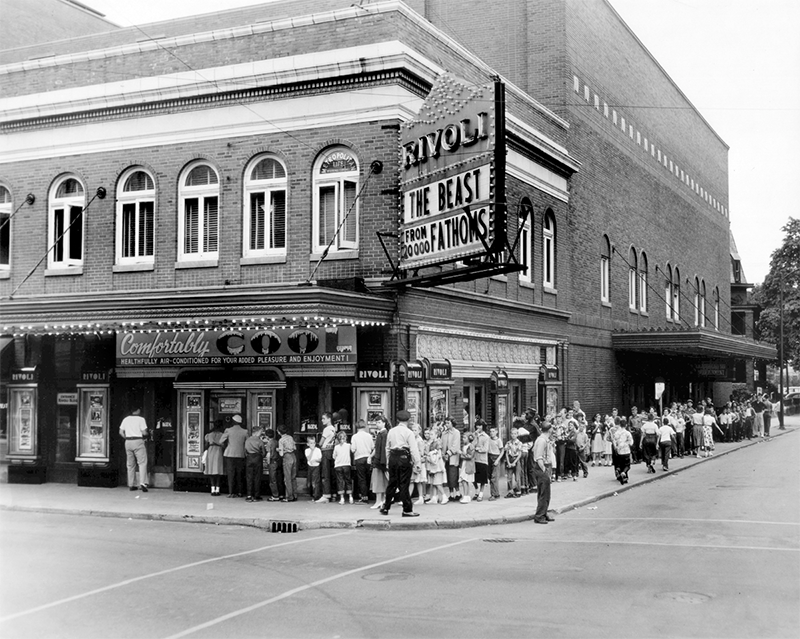 photo provided by John D. Disher
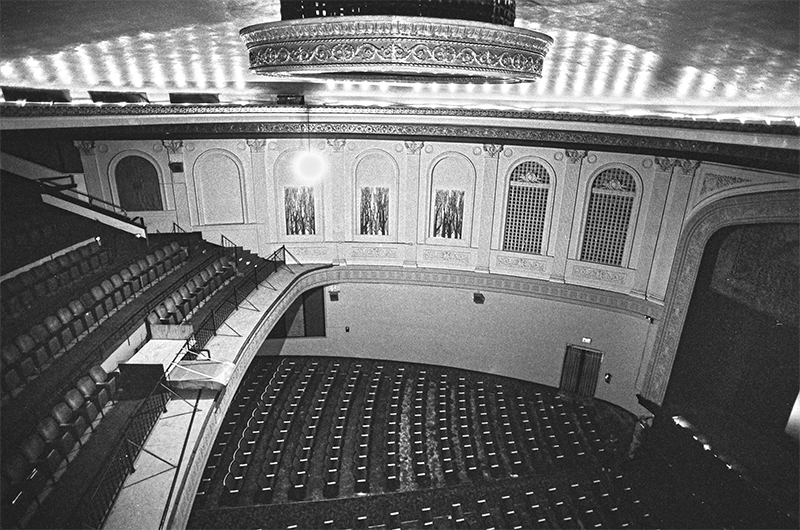 photo by John D. Disher © 1986
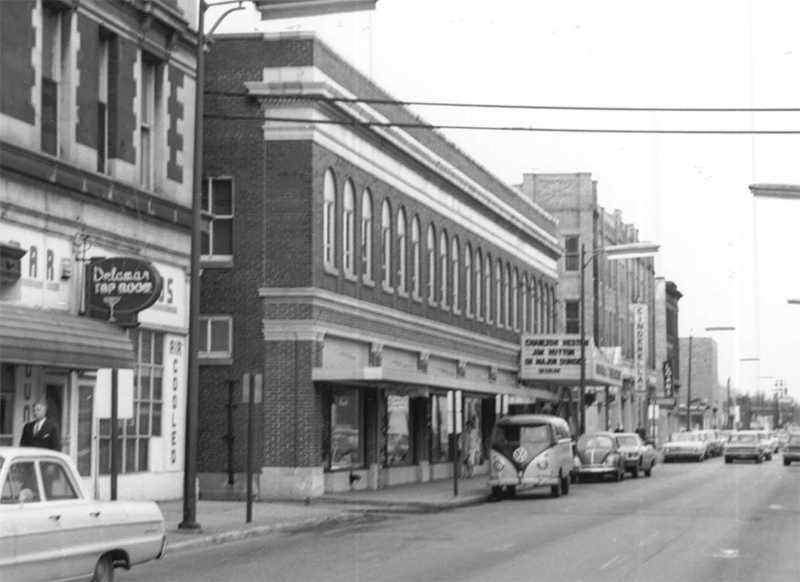 Digital Media Repository. Ball State University Libraries.